Showing posts with label roland goubert. Show all posts

Saturday, May 23, 2020

Masculinity The Chocolate War

Soooo I'm thinking this is going to be my last post analyzing The Chocolate War???? After this, I don't think I really have anything more to say. I copied and pasted all my posts into a google doc (including pictures) and it is 54 pages and 16689 words so needless to say I have said a lot about it. Well, for this post, I'm just gonna go through some elements that I've neglected in previous posts: the role of sports and of masculinity (and discussing power and control a bit more because that ties into masculinity).

CW for cisnormative language and homophobia


Let's take a look at good ole Trinity. The two biggest sports at the school are football and boxing, and ironically enough those two sports are total opposites from each other. Football is a team sport- it requires a group of young men to work together to overcome an opposing team. The game is slow paced, requires strategy and planning, as well as speed and strength. Boxing on the other hand is a one-on-one type sport, mano a mano, just two dudes being guys in the ring beating each other up. It's quicker paced, doesn't require teamwork, and may require some kind of strategy? I don't know, I don't know jack shit about boxing. Either way, it also requires speed and strength like football but is overall more intense. Both sports are highly dangerous, and players can often suffer from concussions and CTE. Moreover, both sports are seen as highly masculine. Sure, there's female boxers out there and I guess a female football league that I found on wikipedia but I've never heard of it before so whatever, I'm just trying to say that these are traditionally masculine pursuits more so than some other sports.

One interesting thing about The Chocolate War is that almost every major student character is on a sports team. Jerry, Goubert, Carter, Janza are all on the football team and Carter also boxes. Even Obie used to play football and regrets not going out for the team at Trinity. The only student that stands out is Archie, who hates sports and considers athletes to be stupid (side note, he doesn't exercise and eats chocolate like every day, kid's gotta be rotting from the inside). I've mentioned in previous posts that Archie is different from the other boys in that he's not a traditional manly man. He represents something scarier to the boys of Trinity than a typical violent bully- he's something that they can't understand and can't fight their usual way. Sports are pretty straightforward- go use your strength to crush the other guy, pretty straightforward. But you can't just go beat up Archie (well, you could but you'd have to answer to the other Vigils and you don't wanna go toe to toe with Carter). He's intelligent, a creature that uses wits and manipulation.


This failure of the traditional masculine fighting style is represented in the fact that Trinity's sports haven't won in ages, which is costing the school funding. Society at large values masculine pursuits such as sports and when schools fail to deliver, they are punished. It is this failure of masculinity kicks off the plot that turns a high school into a war zone.

However, this failure is also the source of strength in overthrowing the Vigils. Throughout the story, Jerry rejects the masculine ideals of violence and holds a peaceful protest. To the other boys, he seems emasculated (going back to my previous post talking about conformity where Jerry appears as the opposite of what young men should strive to be) and getting beat up and called gay is the straw that breaks the camel's back. He gives into violence but becomes further emasculated from losing the fight. Of course, I can't exactly blame him for giving in. What was he supposed to do? Just take the harassment and the beatings? Jerry was stuck in a lose-lose situation and was going to be emasculated either way.
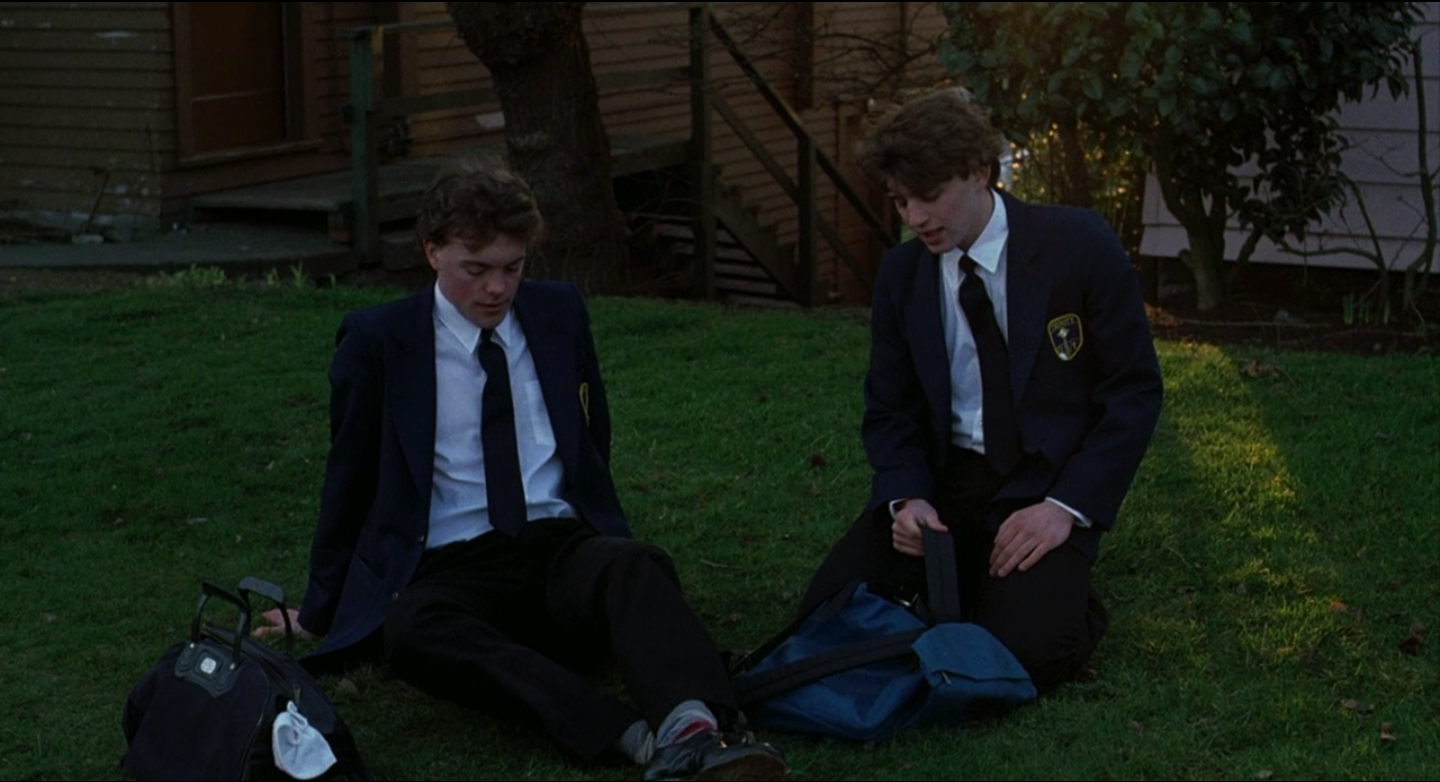

This isn't the Vigils first time emasculating someone. They do the same with Goubert, though it takes far less to break him. Let's take a look at Goubert; he is "fifteen years old and six-one-and-a-half", he is highly athletic- an amazing runner and promising young football player- but he is also timid and sensitive. Already we see a dichotomy between masculine and feminine traits in him. Being summoned and given an assignment by the Vigils is what first breaks him. In chapter 8, immediately after saying his age and height, the narration remarks that he is "too old to cry" and that "he was ashamed and disgusted with himself." We've all heard the old adage 'boys don't cry', and Goubert has been firmly indoctrinated into that belief. His main motivation is the fear of being further emasculated by both the Vigils and Trinity, and this is what leads him to quitting the football and track teams and to stop giving his talents to Trinity, which he believes is "evil". When explaining his reasoning, Goubert tells Jerry that he "was crying like a baby" and that he sees "what [the Vigils are] doing to [Jerry]", and though Jerry doesn't quite understand it Goubert insists that Jerry give up on his rebellion before being further emasculated like he was.


Jerry too falls for the old boys don't cry belief, as I mentioned in my previous post there's a quote in the book where the narration states that "Jerry wished he could be as strong as his father, always in control, masking his sorrow and grief." Jerry pushes back against being emasculated in his own way- he doesn't ever show that the Vigils' harassment is getting to him. He remains 'strong' and doesn't ask for help from any adults in his life. Granted, no adults at Trinity would be able to help, but he makes no effort to tell his father or look outside of Trinity for support. Now, I'm sure that it's common for victims of bullying to be ignored by any authority figures, but regardless Jerry is avoiding telling any adults about it so as not to appear weak.

Now, Archie stands out compared to the other boys- he rejects traditional masculinity, he's the one doing the emasculating and doesn't fear it. Or does he? I think he actually does, but in a different way from the other boys. His fear lies less in being made effeminate or gay and more in being made into a child again. He often calls people 'kid' even if they are around the same age as him, and is unhappy being "a senior in a lousy little high school". Obie mocks Archie by having him meet int the gym knowing that Archie detests it, but it's not really successful in emasculating him. The only person who really intimidates him is Brother Leon, the one who is really in charge and a reminder that Archie is just a teenage boy. Archie himself is being emasculated and made to feel powerless so he exerts his own power on others to feel like a man again.

The movie depicts all this and adds in a homoerotic element as well. I discussed this more in depth in a previous post, but I'll briefly go over it here too because it plays into emasculation. While handing out assignments, Archie asserts his power by invading their personal space, touching them, and overall acting sexually aggressive to scare them. Naturally they are afraid of this, anybody would be, but it adds another later because to these boys, a man showing sexual interest in them puts them in a woman's place.


In the end, there's a grand show down in the form of a boxing match, bringing everything back round to sports. Archie's usual tactics of emasculating boys aren't working on Jerry, so he just falls back on a straightforward fight to emasculate him. In the book it works, in the movie it doesn't, but either way violence and conventional masculinity win.

And I think that's all I've got. I've said all I can about The Chocolate War and don't have anymore posts planned for it (until I get the sequel at least). Stay tuned for another blog post about something else.


Tuesday, May 12, 2020

Character analysis part 2- The Chocolate War

Welcome back, folks! Fun fact: there's more than three characters in The Chocolate War. Here's three more that I'm gonna talk about. Also, I had to read a fucking poem to write this so you better appreciate it.

First up: our hero, Jerry Renault-

king
Jerry Renault is a 14 year old boy (15 in the movie, ignore the fact that his actor is clearly 19) starting his first year of high school, and boy is he in for one wild ride. One main thing to know about Jerry is that he's young and confused. In fact, one of his most often said phrases is "I don't know". He's still finding himself in this world and going through a period of change. Aside from starting high school, a huge event in a young person's life, he also recently lost his mother to cancer and is adjusting to life without her. In my opinion, this sets up his whole character motivation. He doesn't realize it but he saw his mother die before her time and learns that he too could be taken at any moment. This lesson is what spurs him on to 'disturb the universe' and break away from the herd mentality at Trinity. He sees that his father lives a humdrum life, every day at the pharmacy is just 'fine', he never became a doctor, and now his wife is dead and he resorts to drinking to deal with the grief. Jerry views his father as a tale of caution about being complacent and never reaching for what you believe. This is what spurs Jerry on to rebel against the school and the Vigils. However, when he's asked by others why he rebels, he can only say "I don't know". And I think that he truly doesn't know, he doesn't take the time to look at all the facts and figure out what's motivating him. He only knows that he has to dare to disturb the universe in some way. In the movie, there are several scenes where he is just staring at himself in the mirror. This illustrates how he is trying to figure out who he is, looking deep into himself. But he comes up short, or if he does find anything he can't verbalize it to others.

Jerry is quiet but brave. He's new to school and trying to find his footing but he nonetheless makes waves. The story begins in October, so Jerry would have been at Trinity for only a month or two when he dives in head first to disturb the order. His rebellion isn't loud and brash, he doesn't rile up the other students to revolution, but rather quiet and pacifistic. He doesn't need to shout to be heard, he disrupts the hive mind with a simple 'no'. In his moments of peaceful protest he is at his strongest. He tends to avoid conflict, as seen when he is being interrogated by Archie and he hardly speaks because he knows there's no point in it. The beginning of his downfall is when he becomes incensed at Janza throwing homophobic slurs at him and agrees to the boxing match. He abandoned his pacifistic principles and gave way to his anger. By the time he realized his mistake, he was too proud to back down from the fight in front of the whole school.  While him agreeing to the fight might make him seem brave to outsiders it actually shows him at his most cowardly. He is brave when he disrupts the system by remaining cool, calm, and peaceful, when nobody can get to him and become enraged at his disobedience.

He is also inspired by the poem "The Love Song of J. Alfred Prufrock" by T.S. Eliot (also the reason we have Cats starring Jason Derulo), who's work he has to study in class. For a bit of background, Eliot was a Catholic poet and published "Prufrock" in 1915. I read the poem once over before writing this, didn't really get it, so I went on Wikipedia and am just going with what they said. The poem follows the character of Prufrock and his lamenting on 'lost opportunities', 'sexual frustration', 'emasculation', and 'awareness of mortality'. To quote Wikipedia directly the poem "relays the thoughts of a sexually frustrated middle-aged man who wants to say something but is afraid to do so, and ultimately does not". In Jerry's locker he has a poster of a lone man on the beach with a quote from "Prufrock" that reads"do I dare disturb the universe?" Jerry himself does not know why he chose this poster, 'but it had moved him mysteriously'. Again, Jerry is living in a state of confusion where he doesn't know why he does the things he does but just knows that he must. The character of Prufrock reflects what Jerry's life could become. He doesn't want to be like Prufrock, alone and full of regrets for never striving towards something greater. This theme is also apparent in Jerry's relationship with his father, who never strived towards his goals, and how Jerry wants to follow a different path.

Jerry and big papa
Moreover, the character of Prufrock is struggling with sexual frustration and reflects how Jerry (and most teen boys) is coming of age and learning about sex and love. If Jerry does not develop a healthy relationship with sex then he could end up like Prufrock, alone and with unfulfilled lust. In the book, Jerry has a crush on a girl named Ellen Barrett and calls her one day. He can't find the words to admit his feelings to her and after hearing her ask about some guy named Danny and if Jerry is a 'pervert' he realizes that he doesn't really know this girl and simply idealized her in his mind. Despite the call being a failure, the narration still remarks that he had taken a huge step in calling at all and has 'broken the routine of his days and nights'. He has done what Prufrock never achieved- he put himself out there. He gains some confidence from this episode and renews his passion for defying Brother Leon and the Vigils.

There are other aspects about Jerry's psyche that I would like to discuss but I'll be saving for now, such as his role on the football team, his failure in taking down the Vigils, and the strange dreams he has in the movie. Overall, Jerry is a confused but strong young man.


Next we have Obie-


Obie is the secretary of the Vigils and Archie's sidekick. Unlike other sidekicks however, he actively hates Archie. He behaves rather passive-aggressively towards him, such as having Archie meet him in the gym knowing how much he hates it. He still acts subservient towards him to keep his place in the Vigils and avoid becoming one of his victims. He keeps chocolate handy to please Archie, keeps track of every kid in school for him, risks his job just to serve him. He is disloyal to Archie, but of course why should he be loyal in the first place? Archie treats him coldly, only showing the briefest bit of kindness, condescends to him like a servant, and has done nothing to earn his loyalty. Obie is the person closest to Archie and is the one of the few who can see not only the full extent of his cruelty but also the cracking facade and hollowness beneath. He contrasts with Archie in many ways- where Archie is a handsome and confident but amazingly cruel leader, Obie is a follower, just someone who does what others want and an otherwise average kid. Obie is no doubt a bully, any member of the Vigils is one by default, but he does have some standards compared to Archie. He dislikes the idea of handing an assignment to Jerry and feels for this 'skinny kid' with a dead mother. However, despite his initial protests, he never goes out of his way to defend Jerry once the harassment starts and doesn't seem remorseful for his role in it. Of course, were he to defend Jerry he would lose his place in the Vigils and become a target. I can't decide if Obie is cowardly or just has a strong sense of self preservation.

One thing that's clear about Obie is that he's a follower and gives away his own beliefs to make way for the group. At the end of chapter 2 he is looking out across the football field, lamenting that he never tried out for the team, and finds that 'the shadows of the goal posts resembled a network of crosses, empty crucifixes' (this scene also contains the amusing line 'that's enough symbolism for one day', just thought I'd share). I want to discuss the theme of football and sports in the book in a later post, but here I want to say that even though Obie never ended up on the football team, he still ended up on a team- the Vigils. The goal posts resembling crosses reflects how he kills his own wants and free will for the good of the group. He sees the death of his own self in assimilating into the group. Eventually, Obie grows somewhat of a spine and teams up with Carter to try and take down Archie. Of course, they fail and Obie is put right back into the position he started in. However, in the last chapter, Obie again sees the goal posts after the boxing match and 'they reminded him of something. He couldn't remember'. It is during this scene that Obie makes his hatred of Archie clear, threatening that someday he'll get his and calling Leon a bastard. This is also the scene where Obie doesn't provide a Hershey to Archie when asked. The character development is clear here- he no longer will push aside his own feelings for the good of the Vigils and Archie. The goal posts no longer remind him of crosses, he no longer sees his own death but rather the death of Archie. And that's all I have to say about him at the moment.


The last character I'll be analyzing for now is Roland Goubert-

He's really tall
So they call this kid "the Goober" but I'm just gonna call him Goubert because I can't write a serious analysis with the word 'goober' in it. Anyway, he is Jerry's only friend and a fellow member of the football team. His whole thing is that he's really good at running and other sports. He comes across as a counterpart to Obie in that he is sort of a sidekick to Jerry and also a follower. Unlike Obie, he is not at all a bully and in fact a very gentle soul and prone to tears. Even cold hearted Archie nearly feels sorry for him. When he is forced by the Vigils to mess with room nineteen, he is overcome by guilt for hurting the sensitive Brother Eugene. This guilt wreaks havoc inside him and causes him to quit sports. Despite being a tall, strong athlete, Goubert is sensitive, quiet, and obedient. During Jerry's rebellion against the chocolate sale and the Vigils, Goubert wishes that Jerry would give it up and just conform like the rest of them. Goubert doesn't like conflict and wants to keep things stable and fly under the radar. Every time Jerry says 'no' in class, Goubert flinches inside and is troubled by all the drama. Eventually, he comes around to align himself with Jerry but he fails to voice it. He stops selling chocolates but tells nobody, and nobody ever gets the chance to notice because the Vigils fake him reaching his quota without him knowing. Goubert contrasts with Jerry in that Jerry is a pacifist, Goubert is just passive. He doesn't make waves and allows the Vigils to walk all over him and the other students.

Maybe if Goubert had made it more known that he was joining Jerry in rebellion that things would have gone different, but Goubert failed him in that. While I can't blame the kid for being afraid (again, he's like only 14 or 15), it is disappointing that he left his friend to hang. However, from his point of view it makes sense that he wouldn't want to defy the Vigils. He saw, and was made to be responsible for, Brother Eugene having a mental breakdown after the incident in room nineteen. He saw just how seriously the Vigils could hurt a person and was terrified into submission. In the end, Goubert was in a way proven right. Jerry loses the fight in the book, and tries to tell Goubert not to disturb the universe like he did. In the movie, when Jerry wins the fight, he looks out at the crowd and sees Goubert's disappointed face. Goubert dislikes the way things have snowballed into a giant showdown, this is the opposite of everything he wanted. Overall, he's just a child that wants to lead a simple, ordinary life with his head down.


Okay that's it for character analyses :) Join me next time for looking at more themes :)